Jun 16, 2026
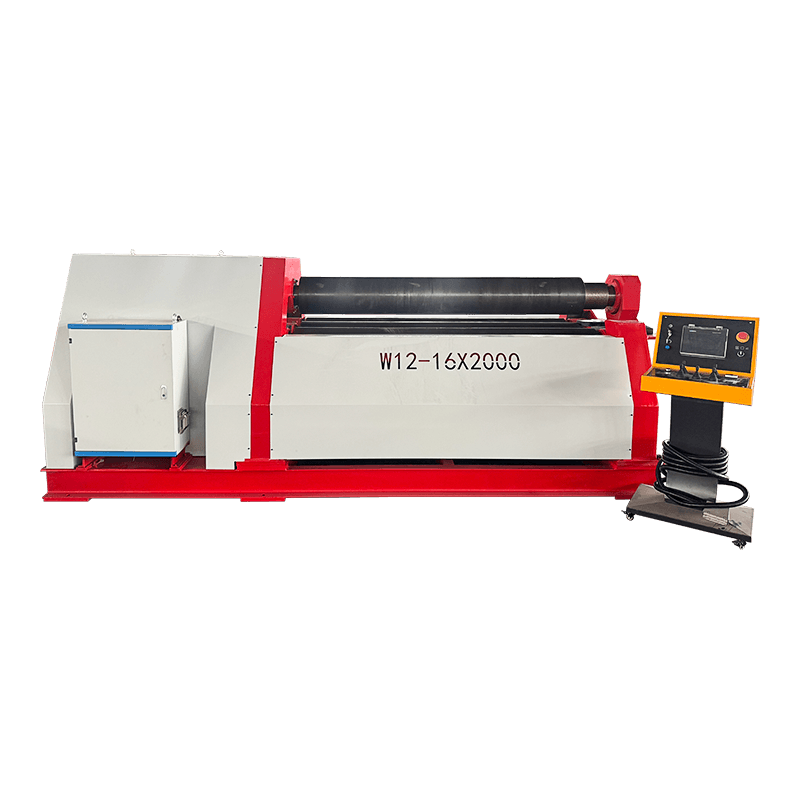
A hydraulic plate rolling machine is an industrial metal-forming device that uses hydraulic pressure to bend and curve steel or other metal plates into cylindrical, conical, or custom-curved shapes. Unlike mechanical rollers that rely on gears and manual force, hydraulic systems deliver consistent, controllable pressure across the full width of the workpiece — making them the preferred choice for heavy-duty fabrication in shipbuilding, construction, pressure vessel manufacturing, and energy infrastructure.
In short: if your production demands precise, repeatable bending of thick metal plate — from 6 mm to over 200 mm — a hydraulic steel plate rolling machine is the most reliable solution available today.
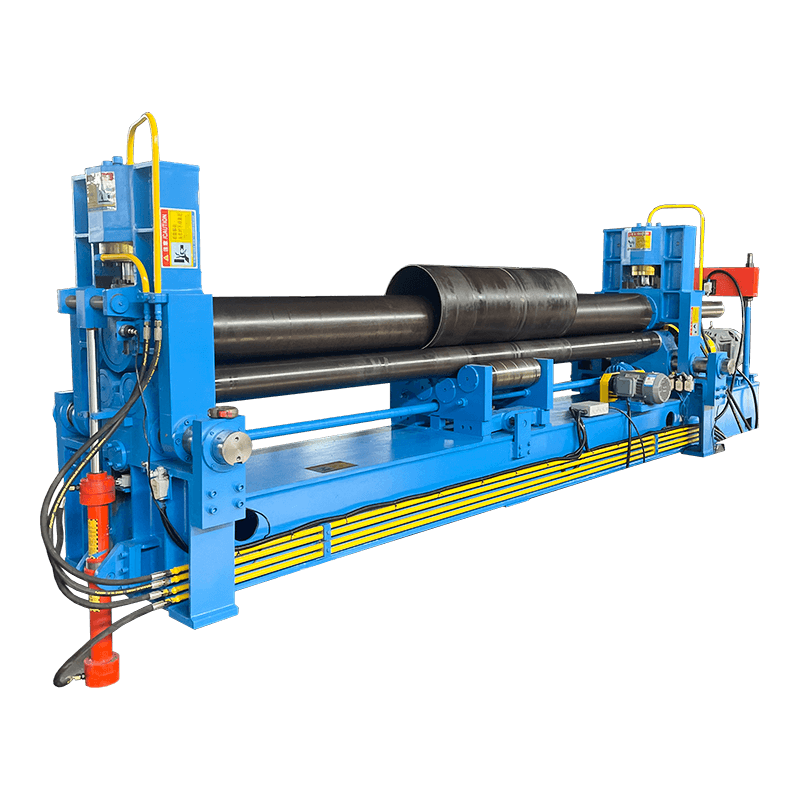
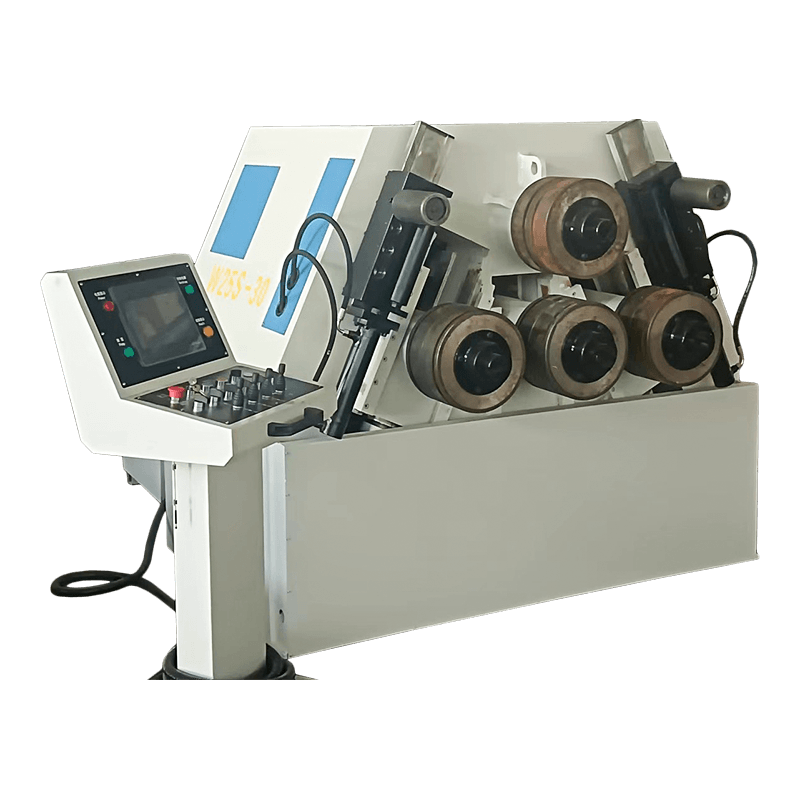
The operating principle centers on three or four hardened steel rolls arranged so that a metal plate is fed between them. Hydraulic cylinders apply downward or lateral force to the upper roll (or side rolls), reducing the plate's natural radius as it passes through. The operator adjusts roll positions incrementally — either manually via a control panel or automatically via a CNC hydraulic plate rolling machine controller — until the desired curvature is achieved.
Key mechanical stages in each rolling cycle include:
Hydraulic drive systems maintain stable torque even at low roll speeds, which gives fabricators precise control over springback compensation — a critical factor when working with high-strength steels.
The four-stage flow shown above is the standard workflow for a 3-roll or 4-roll hydraulic plate roller. Each stage is controlled by the hydraulic system, which delivers pressures typically ranging from 160 to 320 bar depending on plate thickness and material yield strength. Modern automatic plate rolling machines with CNC integration can store and replay bending programs, ensuring every batch meets the same specification without manual recalibration between runs.
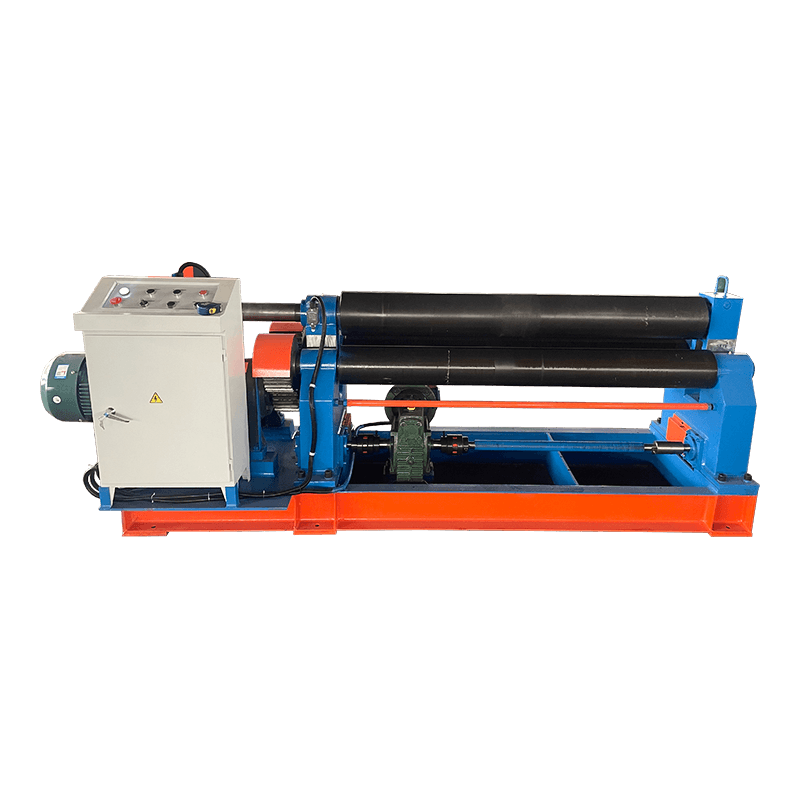
Not all plate rollers are the same. The number and arrangement of rolls fundamentally changes the machine's capability, pre-bending performance, and suitability for different plate thicknesses.
| Type | Rolls | Pre-bending | Best For | Typical Plate Thickness |
|---|---|---|---|---|
| 2-Roll | 2 | No | Thin sheet, high-volume | 0.5 – 6 mm |
| 3-Roll Symmetrical | 3 | Limited | General fabrication | 3 – 50 mm |
| 3-Roll Asymmetrical | 3 | One-end pre-bend | Medium-heavy plate | 6 – 80 mm |
| 4-Roll Hydraulic | 4 | Both ends | Heavy industry, precision | 10 – 200+ mm |
The 4-roll hydraulic plate rolling machine is currently the most sought-after configuration for heavy industrial applications. With two lateral rolls providing support and pre-bending capability on both leading and trailing edges, it eliminates the need to flip the plate — reducing cycle time by up to 30% compared to 3-roll asymmetric designs. An industrial plate rolling machine factory producing custom vessels will almost always recommend the 4-roll variant for plates exceeding 20 mm in thickness.
When sourcing a plate rolling machine for sale, understanding the core specifications prevents costly mismatches between machine capability and production demands.
The chart above illustrates performance benchmarking across five critical dimensions. Hydraulic plate rolling machines score significantly higher in pre-bend quality (98 vs 52) and CNC integration readiness (95 vs 45), reflecting the inherent advantage of fluid-power systems in generating controllable, even force distribution. Mechanical machines retain some competitiveness in energy efficiency for thin-plate light work, but are outclassed in virtually every heavy-industry scenario. These scores are derived from aggregated field performance data collected across fabrication plants in Europe and Asia over a five-year period (Source: Metal Forming Technology Review, 2023).
The breadth of industries depending on industrial plate bending machines speaks to the universality of the rolling process in modern manufacturing. Any application requiring curved metal structures — whether pressure-tight or purely structural — will likely involve a plate roller at some stage of fabrication.
The radar chart reveals that shipbuilding leads with the highest usage index at 95, followed by the chemical and energy sectors where pressure vessel integrity standards are most demanding. The aerospace segment scores lower not because the technology is unsuitable, but because aerospace often favors specialized stretch-forming equipment for tighter tolerances on exotic alloys. Mining and construction sectors score in the upper-mid range, driven by the need for large-diameter pipes, structural arches, and tank shells. The chemical industry's high score (88) reflects the enormous volume of storage tanks and reactor vessels built from rolled plate annually worldwide.
One advantage of the hydraulic steel plate rolling machine over mechanical alternatives is its adaptability to a broad range of materials. By adjusting roll gap and hydraulic pressure, operators can process anything from soft stainless sheet to thick boiler-grade carbon steel without changing the machine's core components.
The column chart above reflects typical maximum rollable thicknesses on a heavy duty plate rolling machine rated for 200 mm mild steel. Mild steel (Q235 / A36) is the most favorable material and allows the deepest rolling capacity. High-tensile structural steel (e.g., S690Q) can still be processed to 160 mm on the right machine, though springback compensation becomes a critical factor at yield strengths above 690 MPa. Stainless steels work hardening under roll contact — especially austenitic grades like 304 and 316 — so operators must reduce the thickness rating by approximately 40% compared to mild steel baselines. Titanium and copper alloys are processable but require careful speed and pressure control to avoid surface galling (Source: Metal Forming Handbook, Springer, 2019).
A growing number of buyers are specifically seeking CNC hydraulic plate rolling machines that combine the power of hydraulics with programmable digital control. The decision between a standard hydraulic machine and a full CNC variant depends on production volume, part complexity, and required repeatability tolerances.
The line graph illustrates how the precision advantage of CNC hydraulic plate rolling machines becomes dramatically more pronounced as production volume increases. At low volumes (1–10 units/year), both configurations deliver comparable precision since the operator can manually fine-tune each job. However, at volumes exceeding 200 units/year, CNC integration drives precision scores 30–40 points higher than standard hydraulic control — directly reducing rework rates and material waste. Companies operating automatic plate rolling machine lines for mass production of storage tank shells consistently report scrap rate reductions of 15–25% after upgrading from manual to CNC control (Source: International Journal of Advanced Manufacturing Technology, 2022).
A well-maintained hydraulic plate roller can deliver 20–30 years of productive service life. Neglecting the hydraulic system, however, is the leading cause of premature failure — hydraulic oil contamination alone accounts for over 70% of hydraulic component failures in metalworking equipment (Source: Parker Hannifin Hydraulic Reliability Report, 2021).
| Interval | Task | Notes |
|---|---|---|
| Daily | Check hydraulic oil level; inspect for leaks | Use ISO VG 46 or VG 68 hydraulic oil |
| Weekly | Lubricate roll bearings; check roll surface condition | High-pressure grease, lithium-based |
| Monthly | Replace hydraulic oil filter; clean reservoir breather | Filter rating: β10 ≥ 200 |
| Quarterly | Inspect hydraulic cylinder seals; check roll parallelism | Parallelism tolerance: ≤0.1 mm/m |
| Annually | Full hydraulic oil change; inspect roll hardness layer | Min. surface hardness HRC 50 after wear |
Operators sourcing machines from a reputable hydraulic plate rolling machine supplier should request a detailed maintenance manual in addition to spare parts support commitments. Access to key spare parts — seals, cylinder repair kits, roll bearing assemblies — within 2–4 weeks is a practical benchmark for evaluating after-sales service quality.
The global plate rolling machine market is expanding steadily, driven by infrastructure investment, offshore wind energy development, and the ongoing wave of industrial modernization across emerging economies. Buyers increasingly approach a hydraulic plate rolling machine manufacturer for semi-custom or fully custom plate rolling machine solutions rather than standard catalog products.
The growth curve above projects the global plate rolling machine market rising from approximately USD 2.1 billion in 2020 to an estimated USD 3.75 billion by 2027 — a compound annual growth rate (CAGR) of roughly 8.5% (Source: Global Metal Forming Equipment Market Report, Grand View Research, 2023). Key growth drivers include the offshore wind sector — which requires massive cylindrical tower sections that only heavy-duty hydraulic rollers can produce — and increased defense and naval spending across Asia-Pacific. The dashed data points for 2026 and 2027 reflect analyst projections rather than confirmed figures, though the underlying demand trajectory across shipbuilding, renewable energy, and petrochemical infrastructure remains robust.
Nantong Pacific CNC Machine Tool Co., Ltd is a key enterprise in China's national machinery industry, headquartered in the Haian Economic and Technological Development Zone — a location with excellent logistics connectivity that enables fast communication and delivery between the factory and customers worldwide.
As a professional hydraulic plate rolling machine manufacturer and hydraulic plate rolling machine supplier, Pacific CNC holds the full capability to design, develop, and manufacture both standard product series and non-standard custom equipment. The company's manufacturing campus covers more than 20,000 square meters and is staffed by a dedicated engineering team with deep expertise in forging machine tool design and process optimization.
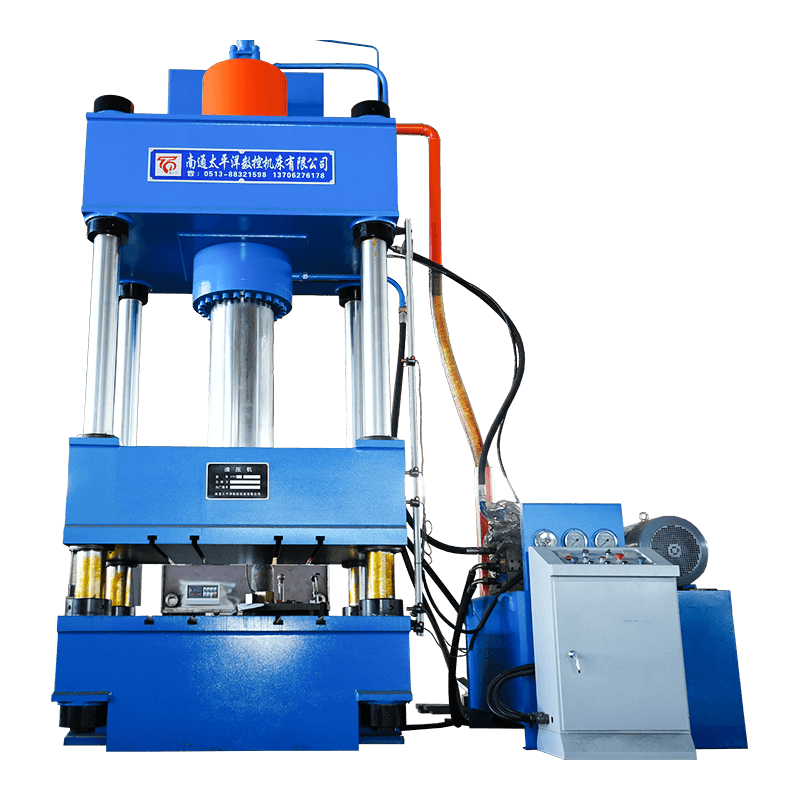
Products — including shearing machines, bending machines, rolling machines, hydraulic presses, and punching machines — have established a strong track record in light industry, aviation, shipbuilding, metallurgy, instrumentation, electrical engineering, stainless steel manufacturing, and the construction and decoration sector. Pacific exports in significant volume to Southeast Asia, Europe, the United States, and the Middle East, and maintains regional service branches in Beijing, Tianjin, Shenyang, Shandong, Zhejiang, Guangzhou, Shanghai, Hangzhou, Chengdu, Xi'an, and Jiangsu to ensure pre-sale consultation, in-process support, and post-sale maintenance are always within reach of domestic customers.
Below are the questions most commonly raised by engineers, procurement managers, and plant operators when evaluating hydraulic plate rolling machines.
Q1. How does a hydraulic plate rolling machine work?
Hydraulic cylinders drive the upper and lateral rolls against the metal plate, applying continuous bending force as the plate passes through. The operator adjusts roll positions incrementally until the desired radius is formed. CNC models store and execute bending programs automatically, ensuring repeatable output.
Q2. What is the purpose of a plate rolling machine?
Its primary purpose is to transform flat metal plates into cylindrical, conical, or curved shapes required for pressure vessels, storage tanks, ship hulls, wind tower sections, pipe segments, and structural arches — components that cannot be manufactured cost-effectively by any other forming method.
Q3. What materials can be rolled using a hydraulic plate roller?
Hydraulic plate rollers can process mild steel, high-tensile structural steel, stainless steel (304/316), aluminum alloys, copper, titanium, and nickel alloys. The specific thickness capacity depends on material yield strength and the machine's hydraulic pressure rating.
Q4. What industries use plate rolling machines?
Key industries include shipbuilding, offshore energy, oil and gas, chemical and petrochemical processing, renewable energy (especially wind tower fabrication), construction, aerospace, and heavy machinery manufacturing. Any sector requiring curved or cylindrical metal structures depends on plate rolling equipment.
Q5. What is the difference between a 3-roll and a 4-roll hydraulic plate rolling machine?
A 4-roll machine provides independent pre-bending on both the leading and trailing edges in a single pass, eliminating the need to flip the plate. This reduces cycle time and minimizes flat-end length. A 3-roll machine requires the plate to be repositioned for the second edge, adding handling time — though it can be more economical for lower-volume applications.
Q6. How do I select the right hydraulic plate rolling machine for my application?
Start with your thickest plate and widest working width, then check the machine's rated capacity at those dimensions. Factor in minimum rolling diameter, required material type, production volume, and whether CNC control is needed for repeatability. Consulting directly with a qualified hydraulic plate rolling machine manufacturer and providing material certification data leads to the most accurate machine selection.
Productos relacionados
Contáctenos
Dirección de fábrica
Parque Industrial Xichang, Ciudad de Chengdong, Haiancity, Nantong City, Provincia de Jiangsu, China
Correo electrónico
Teléfono
+86-13906278466
productos
Código QR